About
Client advocate · Since 2004
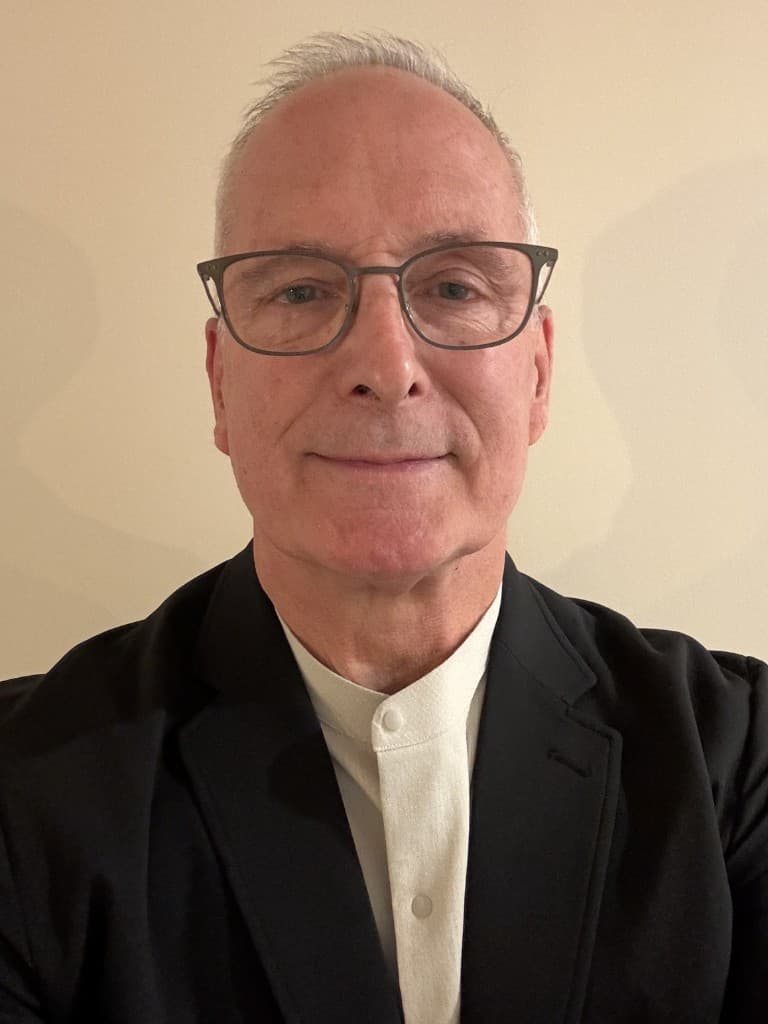
About Bob
I'm a client advocate for commercial and industrial interiors. Since 2004 I've focused on the details that tenants and operators actually feel—air quality and lighting first—and I've stayed accountable for outcomes end to end.
- On the ground
- 20+ yrs
- Delivery
- 100% accountable
- Turnkey projects
- Up to ~$500K
Where it started
Commercial tenants complain about two things more than almost anything else: indoor air quality—too hot, too cold, not enough fresh air—and lighting that's too bright, too dim, too blue, or impossible to control.
Those two problems pulled me into the work in 2004. I went to Sweden when they were roughly ten years ahead of North America on supplemental air filtration and brought ionization technology into Canada. It was ahead of its time, but it taught me how much trust matters when you fix one painful part of a building.
Once you earn that trust, people call you back. Refinishing furniture. Mobile filtration during construction. A senior management lounge that needed air treatment so cigar smoke never reached the rest of the floor. Over time that meant becoming useful at nearly every facet of a commercial or industrial site—not as a licensed engineer, but from firsthand experience on the ground.
The accountability gap
In a conventional interior project, an architect or designer writes the spec. Engineers engineer it. A general contractor bids it out to trades. When something goes wrong, responsibility travels upward: the engineer says it was built wrong; the contractor says they built what they were told.
Clients hire me because I take on a project as one accountable thread. If I accept the work, I'm responsible for the outcome—whoever else is on site, and whether the issue was a spec gap, a delivery miss, or a trade coordination problem. Since 2004 I haven't had a delivery issue that left a client unsatisfied at the level we agreed.
What I focus on is how interiors actually get done in the real world. I'm a client advocate in the operational sense: I walk the site, I talk to designers, engineers, and contractors, and they either work under my coordination or I'm embedded on their team. That's different from a designer or architect who is nominally on your side but trained primarily in design—not in making trades, products, and schedules line up.
What I do
I deliver turnkey interior work—typically up to about half a million dollars—for organizations that don't have in-house facilities depth. It starts with a site audit and a conversation with the people who live in the space, then I manage the process through delivery.
Through Competitive Quality Imports Limited (CQIL) I source product directly from manufacturers instead of passing you through four layers of markup. Electrical contractors quote labor on my packages; supply and install stay with me, with clear site instructions from audits I've already done. Trades prefer it because they're not carrying cash flow on fixtures for a thin margin, and clients prefer it because the advocate who specified the solution is the same person accountable when something has to change on site.
- Indoor air quality: temperature, filtration, supplemental treatment, construction-phase mobile units
- Lighting: brightness, colour temperature, controls, and environments that match how people use the space
- Specialist environments and sensor strategy where performance has to hold after move-in
What I don't do
I'm not a general contractor, and I'm not a professional project manager on the large conventional jobs those firms are built for. They handle the bigger capital work their way; I take the smaller, detail-heavy projects where accountability usually fractures.
I stay vendor-neutral on selection: your requirements drive what goes in the building. My role is to qualify and quantify the problem with you, then own the path to a solution you can defend internally.
Three businesses, one advocate
Depending on the building, the right front door is MIET for workplace lifecycle, CQIL for direct supply and indoor environments, or RCI Solutions for energy reduction. RCI is a DBA under CQIL for invoicing, but on the ground it's the lane for reduce–conserve–innovate work.
When a project spans more than one lane, I keep a single thread of accountability so you're not juggling three vendors who each point somewhere else.
Where to start
Operating businesses
MIET
Move · Infrastructure · Environment · Technology
Lifecycle office work—from decommission and surveys through move management, fit-out, and transition—with employee wellness and design realization in view.
Learn moreVisit miet.ca ↗Competitive Quality Imports Limited
CQIL · Direct supply & indoor environments
Applied expertise and manufacturer-direct sourcing for air quality, lighting, sensors, and specialist spaces—accountable delivery without a layered supply chain.
Learn moreRCI Solutions
Reduce · Conserve · Innovate
Energy reduction since 2010: what's on site, what should replace it, grants and incentives maximized, and ROI packaged for the CFO. Recycling certificates for lighting and furniture when landfill diversion is part of the mandate.
Learn more